
Buying a fiber laser engraver is a serious investment, and the machine you choose will shape what kind of work you can take on for years. Before you commit, here are the eight questions worth answering first.
1. What materials will you actually be engraving?
Fiber lasers are built for metal — stainless steel, aluminum, brass, titanium, and coated surfaces. If your work is mostly wood, acrylic, leather, or other non-metal materials, you’ll want a CO2 system instead — we carry our own CO2 lineup, the Razor and Blade series, for exactly that kind of work, and plenty of shops end up running both side by side. Get clear on what you’re actually selling before you pick the technology.
2. How much power do you need — 30W or 50W?
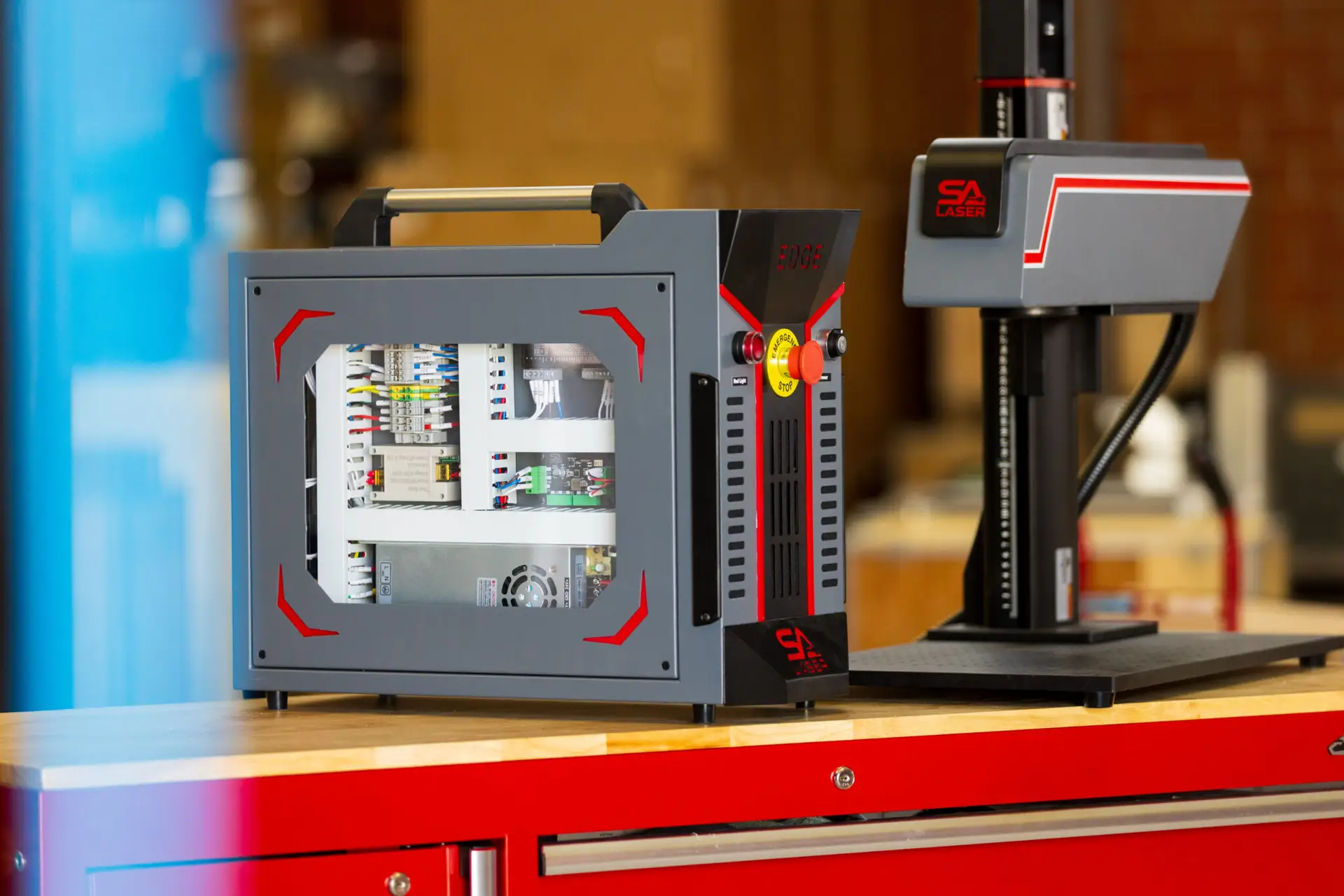
More watts means faster marking and the ability to cut deeper into harder metals, but it also costs more. A 30W system handles most engraving, marking, and light cutting work; a 50W system is worth it if you’re running higher volume or working with thicker, harder materials. Our EDGE Series lineup covers both, so it’s worth comparing specs against the jobs you actually expect to run.
3. What’s the work area, and does it fit your projects?
Bed size determines what you can engrave in one pass. A small work area is fine for jewelry, tools, and firearm parts, but it becomes a bottleneck fast if you’re doing signage, larger panels, or batch production. Every EDGE Series system we build is configured around the work you actually plan to run — measure your typical project sizes first, then talk to us about which EDGE configuration fits, rather than guessing after you buy.
4. What software does it run, and how steep is the learning curve?
Most fiber laser systems, including ours, run on LightBurn — widely used, well documented, and not too difficult to pick up with the right onboarding. Every EDGE Series system we sell comes standard with LightBurn already set up, so you’re not stuck asking a vendor whether software is even included, or paying extra for a license just to get started.
5. Is hands-on training included, or are you on your own?
A laser is only as good as your ability to run it. Ask whether training is included in the price, whether it’s in person or remote, and how much of it is hands-on versus just watching videos. We build this in two ways: Spark™, our 5-day hands-on training here in San Antonio, and Flash™, our self-paced online training for CO2 and fiber systems — so you’re never left to figure out calibration and workflow on your own. This is one of the biggest differences between vendors, and it’s usually the first thing people wish they’d asked about.
6. What support and warranty stand behind the machine?
Lasers need calibration, lens cleaning, and occasional troubleshooting. Find out what the warranty actually covers, how long it lasts, and whether support comes from the manufacturer or a distributor you may never hear from again. Every EDGE Series system comes with a 2-year warranty and support from our own team here in San Antonio — not an overseas manufacturer or a reseller who disappears after the sale. A cheaper machine with no real support behind it usually ends up costing more.
7. What financing options are available?
A fiber laser is a meaningful upfront cost, and financing can make sense if it lets you start generating revenue with the machine sooner. We work with financing partners like Geneva Capital and ClickLease — worth asking any vendor whether similar options exist and what the real monthly numbers look like.
8. What’s the total cost of ownership?
The machine price is only part of the picture. Factor in lenses, fume extraction, rotary attachments, consumables, and any software subscription before you compare quotes. Every EDGE Series system already includes LightBurn, multiple Opex lenses, and a full supply kit, so you’re not hunting down extras just to start your first job. Two machines priced similarly on paper can end up very different once the full setup is accounted for.
Buying the right fiber laser comes down to matching the machine to the work you actually plan to do, not just the specs sheet. If you want to see the full lineup or talk through which system fits your shop, browse our current EDGE Series systems or reach out — we’re happy to walk through it with you.